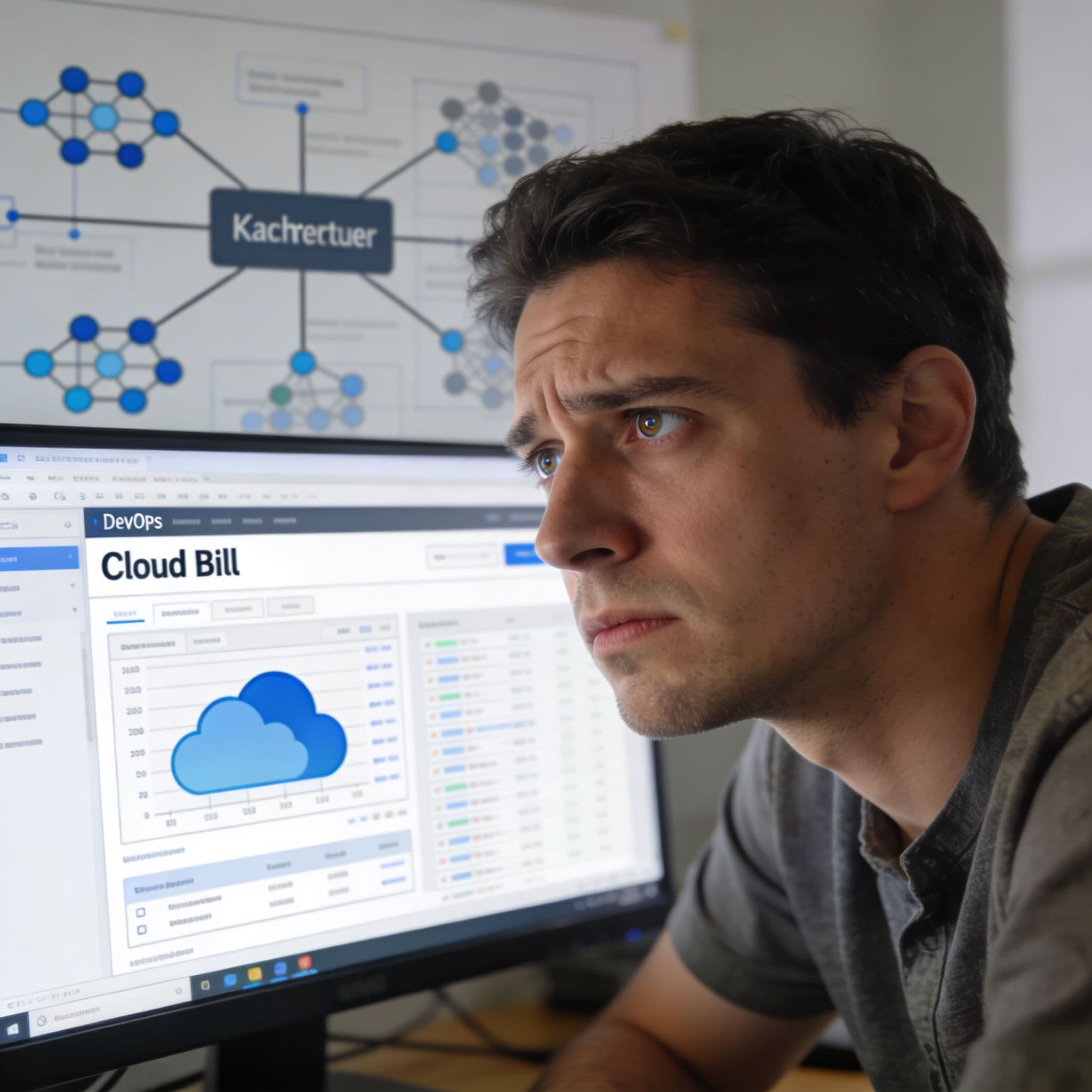

You've embarked on the transformative journey of Kubernetes, but are you acutely aware of its fiscal implications? According to CloudMonitor, over 68% of organizations overspend on Kubernetes by 20–40%+, highlighting a critical need for effective cost optimization strategies. This isn't just about minor adjustments; it's about reclaiming substantial budget that can be reinvested into innovation.
- Proactive Kubernetes cost optimization is non-negotiable in 2026 to prevent budget overruns.
- Right-sizing, intelligent autoscaling, and leveraging spot instances are foundational to cost reduction.
- Advanced strategies like ARM/Graviton adoption and non-compute cost management offer significant savings.
- Specialized focus on AI/ML workload optimization, particularly GPU and inference costs, is now paramount.
- Effective FinOps platforms and integrated cost awareness tools are essential for continuous cost governance.
Introduction: The Growing Challenge of Kubernetes Costs in 2026
The allure of Kubernetes is undeniable. It promises unprecedented scalability, resilience, and developer agility. Yet, this power comes with a complex cost landscape that, if left unmanaged, can quickly erode your planned benefits. As we navigate 2026, the complexity of cloud-native environments, coupled with the rising adoption of specialized workloads like AI/ML, intensifies the need for robust Kubernetes cost optimization.
Why Kubernetes Costs Still Spiral in 2026?
Despite years of experience with cloud native, many organizations still struggle to contain Kubernetes costs. One primary reason is the abstraction Kubernetes provides; while simplifying deployment, it can obscure the underlying resource consumption. This often leads to over-provisioning out of caution or lack of visibility.
Another significant factor is the dynamic nature of cloud pricing models and the sheer volume of resources involved. Without continuous monitoring and adjustment, allocated resources often far exceed actual demand. This problem is exacerbated by the increasing complexity of modern applications and the pervasive "always-on" mentality without corresponding proactive shutdown policies for non-production environments.
Fundamental Strategies for Kubernetes Cost Optimization
Before diving into advanced techniques, ensure your foundation is solid. These fundamental strategies are the bedrock of any successful Kubernetes cost optimization initiative.
Right-Size Resource Requests and Limits
Accurate resource requests and limits are perhaps the most impactful direct control you have over Kubernetes spending. Setting requests too high leads to allocated but unused resources, while limits too low can cause performance issues or evictions, paradoxically driving up costs due to retries or degraded service.
Start by observing actual workload utilization. Implement robust monitoring to understand CPU, memory, and even I/O needs over time. Then, iteratively adjust your requests and limits to match these observed patterns. This isn't a one-time task; workloads evolve, and your configurations must evolve with them.
Implement Intelligent Autoscaling (HPA, VPA, Karpenter, KEDA)
Static provisioning is a relic. Intelligent autoscaling ensures your cluster precisely matches demand. The Horizontal Pod Autoscaler (HPA) scales pods based on metrics like CPU utilization. The Vertical Pod Autoscaler (VPA) automatically adjusts resource requests and limits for individual containers.
For node-level scaling, tools like Karpenter are transformative. Karpenter observes pending pods and launches appropriately sized nodes rapidly, including leveraging cheaper instance types if available. KEDA (Kubernetes Event-driven Autoscaling) extends autoscaling capabilities beyond CPU/memory, allowing you to scale based on external events like message queue lengths or HTTP requests, making it ideal for event-driven architectures.
Leverage Spot and Discounted Instances Aggressively
Cloud providers offer significant discounts for ephemeral (spot) instances and reserved instances/savings plans. Spot instances can reduce compute costs by 70-90% for fault-tolerant workloads. Design your applications to gracefully handle preemption and integrate cluster autoscalers (like Karpenter) that prioritize these cheaper options.
Reserve instances or savings plans are perfect for stable, long-running base loads, offering substantial savings compared to on-demand pricing. A typical strategy involves using reserved instances for your steady-state baseline and spot/on-demand for bursting or less critical workloads. This hybrid approach optimizes your compute spend dramatically.
Advanced Kubernetes Cost Optimization Techniques for 2026
Once the fundamentals are in place, look to these advanced strategies to push your Kubernetes cost optimization efforts further. As K8s cost management evolves, so too must your tactics.
Optimize Node Selection: Embrace ARM/Graviton Architecture
The shift to ARM-based processors, particularly AWS Graviton instances, offers a compelling avenue for significant cost savings and performance improvements. These instances often provide a better price-performance ratio than their x86 counterparts. According to a 2026 study, migrating suitable workloads to Graviton can reduce compute costs by an average of 20-40%.
While not every workload is immediately compatible, modern compilers and container images frequently support multi-architecture builds. Evaluate your existing deployments for Graviton compatibility and prioritize migration for CPU-bound applications or those with high throughput requirements.
Eliminate Orphaned and Zombie Resources
Cloud environments often accumulate forgotten resources that continue to incur costs. These "orphaned" resources might be persistent volumes no longer attached to pods, unreferenced load balancers, or idle database instances. Implementing automated scanning and cleanup policies is crucial.
Regular audits, coupled with tools that can identify and flag unused resources, are essential. Consider integrating lifecycle management policies for all cloud resources provisioned by Kubernetes, ensuring that when the application scales down or is decommissioned, its associated cloud resources are also de-provisioned.
Optimize Storage Costs (PV types, retention, lifecycle)
Storage is often an underestimated cost driver. Choose the right Persistent Volume (PV) type for your workload. High-performance SSDs are expensive; use them only where necessary. Colder data or archives can reside on cheaper, slower storage classes.
Implement intelligent retention policies for backups and snapshots. Do you genuinely need to keep backups for years, or can older versions be moved to a cheaper archival tier? Regularly audit your PVs for size discrepancies or unattached volumes that are still consuming expensive storage.
Reduce Cross-Zone Data Transfer Costs
Data transfer costs, especially between availability zones or regions (egress), can secretly inflate your cloud bill. Design your Kubernetes applications to minimize cross-zone communication where possible. Deploy services that frequently communicate within the same availability zone or region.
Utilize service meshes and ingress controllers to manage traffic efficiently and analyze data flow. For data replication or backup, consider using internal network paths provided by your cloud provider that might be cheaper than public internet routes. For large data movements, investigate direct connect or inter-region peering options.
Deep Dive: Optimizing AI/ML Workload Costs in Kubernetes
The explosion of AI/ML necessitates specialized cost strategies. Inference, not training, is becoming a dominant cost factor. According to Log'in Line, inference represents more than half of cloud spending related to AI in 2026. This demands precise resource allocation.
GPU optimization is critical. Cast AI's 2026 State of Kubernetes Optimization Report found GPU utilization averaged just 5% across non-optimized clusters analyzing AI/ML workloads. Implement intelligent GPU scheduling and autoscaling, ensuring GPUs are not idle. Bin-packing multiple smaller inference models onto a single GPU can dramatically improve utilization. For batch inference, use job schedulers that can spin up and tear down GPU instances on demand.
Consider specialized hardware for inference if your cloud provider offers it (e.g., AWS Inferentia, Google Cloud TPUs). These are designed for cost-effective inference at scale. Also, explore techniques like quantization and model pruning to reduce the computational footprint of your ML models, allowing them to run on fewer or smaller resources.
Tools and Platforms for Kubernetes Cost Optimization in 2026
Effective Cloud cost savings Kubernetes requires more than manual effort alone. You need robust tools to provide visibility, automation, and governance.
Enhancing Cost Visibility with FinOps Platforms
A dedicated FinOps platform is indispensable. These tools aggregate cost data from your cloud provider and Kubernetes, breaking it down by namespace, label, team, and application. This granularity empowers teams to understand their spend and take ownership.
Consider platforms that offer anomaly detection, budget alerts, and show chargeback/showback capabilities. They should also provide recommendations for rightsizing and identifying idle resources. While many general cloud FinOps tools exist, prioritize those with deep Kubernetes integration to provide container-level cost insights.
Integrating Cost Awareness into Developer Workflows
Cost awareness shouldn't be an afterthought; it needs to be an integral part of the development and deployment lifecycle. Tools that integrate directly into CI/CD pipelines can provide cost estimates for new deployments or changes.
This means developers receive feedback on the cost implications of their resource requests before they even hit production. This proactive approach fosters a culture of cost optimization from the ground up, moving responsibility left in the development process.
Automating Governance with Policies (ResourceQuotas, LimitRanges)
Kubernetes provides built-in mechanisms like ResourceQuotas and LimitRanges to enforce resource consumption policies at the namespace level. These are fundamental guardrails to prevent runaway costs.
ResourceQuotasSets aggregate resource limits (CPU, memory, storage) for a namespace. Prevents overallocation per team/project.
LimitRangesEnforces minimum/maximum CPU/memory requests and limits for pods in a namespace. Ensures sane defaults, avoids egregious over-requesting by individual pods.
Case Studies and Best Practices
Consider a large e-commerce company that was experiencing significant cloud bill shock from its Kubernetes clusters. Their initial audit revealed an average CPU utilization of just 8% across all clusters, echoing the broader trend identified by Cast AI's 2026 State of Kubernetes Optimization Report.
They implemented a phased approach:
- Phase 1: Rightsizing and HPA/VPA. Engineers used telemetry data to adjust CPU and memory requests/limits for core applications. HPA and VPA were configured to scale pods automatically based on actual usage, resulting in an initial 15% cost reduction.
- Phase 2: Spot Instances with Karpenter. For stateless microservices, they re-architected to be fault-tolerant and deployed them exclusively on Spot Instances managed by Karpenter. This aggressive use of Spot instances reduced compute costs by an additional 30% for these specific workloads.
- Phase 3: Graviton Migration & AI/ML Optimization. Their data processing and machine learning inference services, heavily reliant on CPU and GPU, were evaluated. Suitable microservices were migrated to Graviton instances, saving another 10% on compute. For their AI inference workloads, they employed intelligent GPU schedulers and model quantization, boosting GPU utilization from 10% to 55% during peak hours and significantly reducing overall GPU spend.
- Phase 4: FinOps Integration. A FinOps platform was integrated, providing real-time visibility and chargeback to individual teams. This fostered a culture of cost awareness, leading to continuous, incremental optimizations by development teams.These iterative steps led to a cumulative reduction of over 45% in their monthly Kubernetes cloud spend, demonstrating the power of a comprehensive and continuous optimization strategy.
Conclusion: Making Kubernetes Cost Optimization a Continuous Discipline
Kubernetes cost optimization is not a project with a defined end date. It's an ongoing discipline that requires continuous attention, intelligent tooling, and a cultural shift towards cost awareness across your engineering organization. From right-sizing and intelligent autoscaling to advanced techniques like Graviton adoption and precise AI/ML workload tuning, every strategy plays a role.
Final Thoughts
Mastering Kubernetes cost optimization 2026 is critical for sustainable cloud infrastructure. By adopting these strategies and fostering a FinOps mindset, you can transform Kubernetes from a potential budget drain into a finely tuned, cost-efficient engine for your innovation. Download our Checklist: 10 Immediate Actions to Reduce Your Kubernetes Costs by 20% This Week!